Grant helps expand services for victims of domestic violence, abuse
This article was originally published by
https://www.pressenterprise.com/2026/04/24/grant-helps-expand-services-for-victims-of-domestic-violence-abuse-in-inland-empire/
.
Published
By
Greg Archer
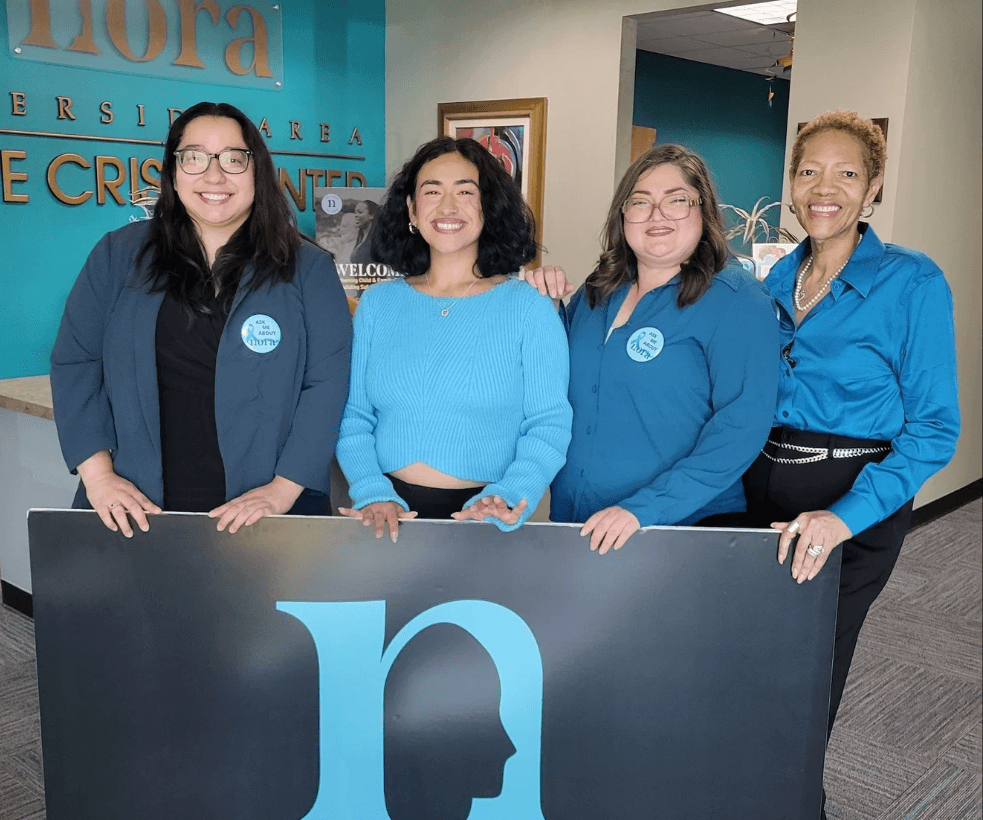
A recent grant from the Women’s Giving Fund at Inland Empire Community Foundation is allowing one nonprofit organization to better help families find healing as they move through and beyond domestic violence.
The Inland Empire Community Foundation will provide NORA
(Nurture, Outreach, Resiliency, and Advocacy) needed financial leverage to strengthen one of its key programs.
“We are so incredibly grateful to be receiving this grant, which will be used for our T.E.A.L Healing Program,” said Adriane Lamar Snider, CEO of NORA. “We know that these are extremely difficult times for families experiencing the stressors of life and just trying to navigate some of the issues that are going on, specifically when there’s an issue of domestic violence, sexual assault or child abuse.”
The T.E.A.L Healing Program provides psychoeducation, trauma processing, and encourages self-sufficiency for women and children survivors of domestic violence through their journey of healing. The program consists of virtual sessions and in-per-son group sessions.
“Each letter represents a part of the program,” Lamar Snider said, noting the T represents transformation, E empowerment, A autonomy, and L for learning.
“The grant allows us to specifically focus on assisting families in building their empowerment as a family unit,” she said. “When there are issues of domestic violence and sexual assault, we can provide the support services families need to just understand these issues and also that what happened is not their fault. Mental health services help healthy families regain their voice, focus on one another, and help strengthen one another.”
The program does that through support group activities, which cover a range of actions, but can include everything from creating vision boards to planning meals together.
“In that way, families and individuals are able to talk about the healing and the support they need,” Lamar Snider said. “They have a space to do that within the family unit and that is so critical.”
NORA’s philosophy centers on the belief that every individual has the right to control their own body and life, and, most importantly, to live free from violence and fear.
Crisis intervention programs also filter into the mix of the nonprofit’s services. Associates are available 24/7 on a crisis hotline to provide survivors immediate and “culturally responsive” emotional support and access to resources. Law enforcement advocacy and court accompaniment is also offered.
For those needing support during court proceedings related to their assault cases, such as obtaining a restraining order or prosecuting the assailant, the advocacy and court accompaniment is vital. In that way, the survivor is able to choose to have a NORA advocate at their side.
Another NORA stand-out is the Prevention Portal on its website. Noting that prevention education was often offered in just schools, NORA tweaked its model to accommodate youth and parent schedules, mainly through a virtual platform designed to empower families to explore difficult topics in a safe setting.
Lamar Snider has been with the organization for eight years.
“We’ve expanded our mission since I came on board,” she said. “We were only able to sustain those individuals who were victims and survivors of sexual assault. I knew that we had to meet the need because there was so much overlap with domes-tic violence and sexual assault and child abuse. We were able to get all of our team members trained in responding to domestic violence and child abuse.”
The nonprofit was also able to expand its mission through strategic planning.
“When I came on board, the organization had not had a strategic plan in more than 15 years,” Lamar Snider said. “I knew we had to come up with a plan on how we would be able to sustain ourselves as an organization and raise awareness about what was happening in our own communities.”
One of the things the organization started doing was collect data.
“Data is so important,” Lamar Snider said. “We wanted to know where the calls are coming from? What cities were trending up in issues of domestic violence and sexual assault? And where could we apply more resources to address those issues of child abuse and sexual assault and domestic violence? This helped us in terms of how effective we could be.”
Learn more at callnora. org.
Inland Empire Community Foundation works to strengthen Inland Southern California through philanthropy. Visit iegives. org for more information.